Buy esculham.eu ?
We are moving the project
esculham.eu .
Are you interested in purchasing the domain
esculham.eu ?
domain@kv-gmbh.de · 0541-91531010
Buy esculham.eu ?
What is the mesh equation and the node equation?
The mesh equation is a fundamental equation used in circuit analysis to calculate the current flowing in a loop of a circuit. It is based on Kirchhoff's voltage law and states that the sum of the voltage drops around a closed loop in a circuit is equal to the product of the current flowing in the loop and the total resistance of the loop. The node equation, on the other hand, is used to calculate the voltage at a specific node in a circuit. It is based on Kirchhoff's current law and states that the sum of currents entering a node is equal to the sum of currents leaving the node. This equation is used to solve for the voltage at a particular node in a circuit. **
'Equation and what?'
Equation and inequality are two fundamental concepts in mathematics. An equation is a statement that two expressions are equal, while an inequality is a statement that two expressions are not equal. Equations are used to find the value of a variable that makes the equation true, while inequalities are used to compare two quantities. Both equations and inequalities are essential tools in solving mathematical problems and modeling real-world situations. **

Similar search terms for Equation
Top-Angebote
Products related to Equation:
-
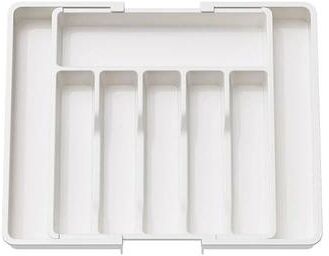
Inspired Finds Expandable Kitchen Drawer Organizer Adjustable Cutlery Tray For Utensils black No TablewareTurn messy drawers into a clean, efficient system with this expandable kitchen drawer organizer designed to maximize space and keep everything within reach. Whether you're storing spoons, forks, or cooking tools, this adjustable utensil tray adapts...66,99 $*Shipping: 0,00 $Secure redirect to the provider
-
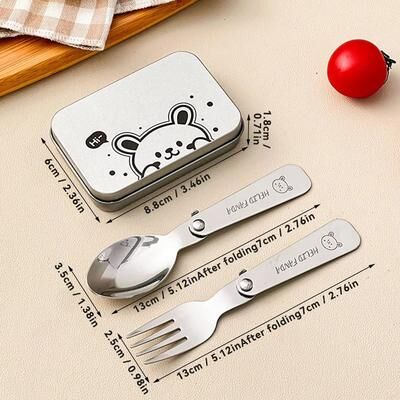
Uplift Picks Portable Folding Camping Cutlery Set With Case Stainless Steel Travel Utensils capybaraNever get caught eating with flimsy disposable utensils again. This folding cutlery set gives you a clean, compact, and reliable way to enjoy meals wherever your day takes you. Designed for campers, travelers, office workers, and outdoor...32,97 $*Shipping: 0,00 $Secure redirect to the provider
-
Uplift Picks Portable Folding Camping Cutlery Set With Case Stainless Steel Travel Utensils bearNever get caught eating with flimsy disposable utensils again. This folding cutlery set gives you a clean, compact, and reliable way to enjoy meals wherever your day takes you. Designed for campers, travelers, office workers, and outdoor...32,97 $*Shipping: 0,00 $Secure redirect to the provider
-
Uplift Picks Portable Folding Camping Cutlery Set With Case Stainless Steel Travel Utensils pandaNever get caught eating with flimsy disposable utensils again. This folding cutlery set gives you a clean, compact, and reliable way to enjoy meals wherever your day takes you. Designed for campers, travelers, office workers, and outdoor...32,97 $*Shipping: 0,00 $Secure redirect to the provider



-
How can one reduce this equation to a quadratic equation?
To reduce an equation to a quadratic equation, one can use the method of substitution. By substituting a variable for a certain expression in the equation, one can transform the equation into a quadratic form. Another method is completing the square, which involves rearranging the equation to isolate the quadratic term and then adding or subtracting a constant to complete the square. Additionally, one can use the quadratic formula to solve for the roots of the equation, which can help in reducing the equation to a quadratic form. **
-
Is a linear equation the same as a parameter equation?
No, a linear equation and a parameter equation are not the same. A linear equation is an equation of the form y = mx + b, where m and b are constants and x and y are variables. A parameter equation, on the other hand, is an equation that contains parameters, which are variables that represent certain values in the equation. Parameter equations can be linear or non-linear, but the presence of parameters distinguishes them from regular linear equations. **
-
What is the second-order difference equation for an inhomogeneous equation?
The second-order difference equation for an inhomogeneous equation is of the form \(y[n] - a_1y[n-1] - a_2y[n-2] = x[n]\), where \(y[n]\) represents the output sequence, \(x[n]\) represents the input sequence, and \(a_1\) and \(a_2\) are constants. This equation describes how the current output value \(y[n]\) is related to the previous two output values \(y[n-1]\) and \(y[n-2]\), as well as the current input value \(x[n]\). The inhomogeneous term \(x[n]\) represents any external influences or disturbances acting on the system. **
-
How can one convert a coordinate equation into a normal equation?
To convert a coordinate equation into a normal equation, you can start by rearranging the equation to isolate the dependent variable on one side. Then, you can simplify the equation by combining like terms and performing any necessary operations. Finally, you can rewrite the equation in standard form, which typically involves expressing the equation in terms of y = mx + b, where m is the slope and b is the y-intercept. **


How can a coordinate equation be converted into a normal equation?
A coordinate equation can be converted into a normal equation by rearranging the terms to isolate the dependent variable on one side of the equation. This involves performing algebraic operations such as addition, subtraction, multiplication, and division to simplify the equation. Once the dependent variable is isolated, the equation is in normal form and can be used to solve for the variable in terms of the independent variables. This process allows for a clearer understanding of the relationship between the variables and makes it easier to analyze and interpret the equation. **
What is this equation?
This equation is the Pythagorean theorem, which states that in a right-angled triangle, the square of the length of the hypotenuse (the side opposite the right angle) is equal to the sum of the squares of the lengths of the other two sides. It is represented as a^2 + b^2 = c^2, where 'a' and 'b' are the lengths of the two shorter sides, and 'c' is the length of the hypotenuse. This equation is fundamental in geometry and is used to calculate the length of any side of a right triangle when the lengths of the other two sides are known. **
Top-Angebote
Products related to Equation:
-
Utopia Alley 40 Pcs Cooking Utensils Set with Apron Silicone Turner Tong Spatula Spoon Kitchenware Organizer, BlackFOOD GRADE SILICONE & PREMIUM WOODEN HANDEL: The kitchen utensil set is made of food-grade safe silicone material and is BPA-free.33,99 $*Shipping: 0,00 $Secure redirect to the provider
-
Inspired Finds Expandable Cutlery Drawer Organizer Tray For Silverware, Spoons, And Kitchen Utensils whiteTransform messy kitchen drawers into organized storage spaces with this expandable cutlery organizer designed to keep silverware, utensils, and kitchen tools neatly arranged. Whether you're managing a busy family kitchen or maximizing storage in a...117,99 $*Shipping: 0,00 $Secure redirect to the provider
-
Inspired Finds Expandable Kitchen Drawer Organizer Adjustable Cutlery Tray For Utensils black No TablewareTurn messy drawers into a clean, efficient system with this expandable kitchen drawer organizer designed to maximize space and keep everything within reach. Whether you're storing spoons, forks, or cooking tools, this adjustable utensil tray adapts...66,99 $*Shipping: 0,00 $Secure redirect to the provider
-
Uplift Picks Portable Folding Camping Cutlery Set With Case Stainless Steel Travel Utensils capybaraNever get caught eating with flimsy disposable utensils again. This folding cutlery set gives you a clean, compact, and reliable way to enjoy meals wherever your day takes you. Designed for campers, travelers, office workers, and outdoor...32,97 $*Shipping: 0,00 $Secure redirect to the provider
-
What is the mesh equation and the node equation?
The mesh equation is a fundamental equation used in circuit analysis to calculate the current flowing in a loop of a circuit. It is based on Kirchhoff's voltage law and states that the sum of the voltage drops around a closed loop in a circuit is equal to the product of the current flowing in the loop and the total resistance of the loop. The node equation, on the other hand, is used to calculate the voltage at a specific node in a circuit. It is based on Kirchhoff's current law and states that the sum of currents entering a node is equal to the sum of currents leaving the node. This equation is used to solve for the voltage at a particular node in a circuit. **
-
'Equation and what?'
Equation and inequality are two fundamental concepts in mathematics. An equation is a statement that two expressions are equal, while an inequality is a statement that two expressions are not equal. Equations are used to find the value of a variable that makes the equation true, while inequalities are used to compare two quantities. Both equations and inequalities are essential tools in solving mathematical problems and modeling real-world situations. **
-
How can one reduce this equation to a quadratic equation?
To reduce an equation to a quadratic equation, one can use the method of substitution. By substituting a variable for a certain expression in the equation, one can transform the equation into a quadratic form. Another method is completing the square, which involves rearranging the equation to isolate the quadratic term and then adding or subtracting a constant to complete the square. Additionally, one can use the quadratic formula to solve for the roots of the equation, which can help in reducing the equation to a quadratic form. **
-
Is a linear equation the same as a parameter equation?
No, a linear equation and a parameter equation are not the same. A linear equation is an equation of the form y = mx + b, where m and b are constants and x and y are variables. A parameter equation, on the other hand, is an equation that contains parameters, which are variables that represent certain values in the equation. Parameter equations can be linear or non-linear, but the presence of parameters distinguishes them from regular linear equations. **
Similar search terms for Equation
-
Uplift Picks Portable Folding Camping Cutlery Set With Case Stainless Steel Travel Utensils bearNever get caught eating with flimsy disposable utensils again. This folding cutlery set gives you a clean, compact, and reliable way to enjoy meals wherever your day takes you. Designed for campers, travelers, office workers, and outdoor...32,97 $*Shipping: 0,00 $Secure redirect to the provider
-
Uplift Picks Portable Folding Camping Cutlery Set With Case Stainless Steel Travel Utensils pandaNever get caught eating with flimsy disposable utensils again. This folding cutlery set gives you a clean, compact, and reliable way to enjoy meals wherever your day takes you. Designed for campers, travelers, office workers, and outdoor...32,97 $*Shipping: 0,00 $Secure redirect to the provider
-
Inspired Finds Expandable Kitchen Drawer Organizer Adjustable Cutlery Tray For Utensils white No TablewareTurn messy drawers into a clean, efficient system with this expandable kitchen drawer organizer designed to maximize space and keep everything within reach. Whether you're storing spoons, forks, or cooking tools, this adjustable utensil tray adapts...66,99 $*Shipping: 0,00 $Secure redirect to the provider
-
Inspired Finds Expandable Cutlery Drawer Organizer Tray For Silverware, Spoons, And Kitchen Utensils blackTransform messy kitchen drawers into organized storage spaces with this expandable cutlery organizer designed to keep silverware, utensils, and kitchen tools neatly arranged. Whether you're managing a busy family kitchen or maximizing storage in a...117,99 $*Shipping: 0,00 $Secure redirect to the provider
-
What is the second-order difference equation for an inhomogeneous equation?
The second-order difference equation for an inhomogeneous equation is of the form \(y[n] - a_1y[n-1] - a_2y[n-2] = x[n]\), where \(y[n]\) represents the output sequence, \(x[n]\) represents the input sequence, and \(a_1\) and \(a_2\) are constants. This equation describes how the current output value \(y[n]\) is related to the previous two output values \(y[n-1]\) and \(y[n-2]\), as well as the current input value \(x[n]\). The inhomogeneous term \(x[n]\) represents any external influences or disturbances acting on the system. **
-
How can one convert a coordinate equation into a normal equation?
To convert a coordinate equation into a normal equation, you can start by rearranging the equation to isolate the dependent variable on one side. Then, you can simplify the equation by combining like terms and performing any necessary operations. Finally, you can rewrite the equation in standard form, which typically involves expressing the equation in terms of y = mx + b, where m is the slope and b is the y-intercept. **
-
How can a coordinate equation be converted into a normal equation?
A coordinate equation can be converted into a normal equation by rearranging the terms to isolate the dependent variable on one side of the equation. This involves performing algebraic operations such as addition, subtraction, multiplication, and division to simplify the equation. Once the dependent variable is isolated, the equation is in normal form and can be used to solve for the variable in terms of the independent variables. This process allows for a clearer understanding of the relationship between the variables and makes it easier to analyze and interpret the equation. **
-
What is this equation?
This equation is the Pythagorean theorem, which states that in a right-angled triangle, the square of the length of the hypotenuse (the side opposite the right angle) is equal to the sum of the squares of the lengths of the other two sides. It is represented as a^2 + b^2 = c^2, where 'a' and 'b' are the lengths of the two shorter sides, and 'c' is the length of the hypotenuse. This equation is fundamental in geometry and is used to calculate the length of any side of a right triangle when the lengths of the other two sides are known. **
* All prices are inclusive of VAT and, if applicable, plus shipping costs. The offer information is based on the details provided by the respective shop and is updated through automated processes. Real-time updates do not occur, so deviations can occur in individual cases. ** Note: Parts of this content were created by AI.